
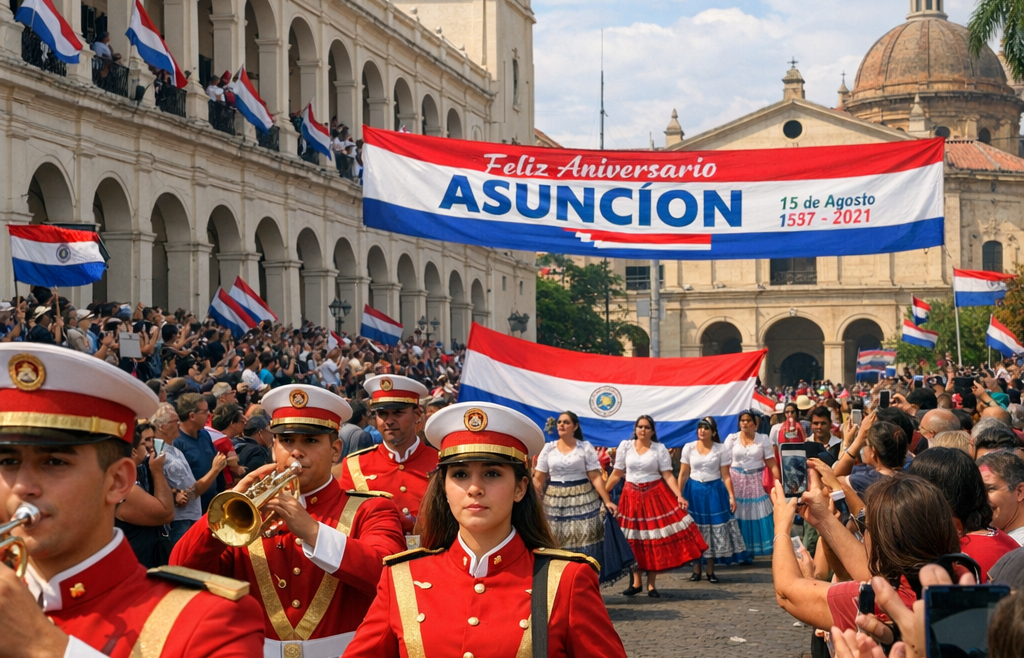
Every year, on August 15th, my city has a birthday. Not a metaphorical one — an actual, real, 489-years-and-counting birthday, and honestly? We know how to throw one. If you’re anywhere near Asunción around this date, drop whatever else you had planned. Asunción Founding Day isn’t a quiet little plaque-and-ceremony kind of holiday. It’s parades before you’ve finished your first mate, marching bands echoing off colonial buildings, and a whole city that shows up — because we’re genuinely, unapologetically proud of this place.
I remember being a kid, half-asleep, dragged out early by my mom because “hoy es el día de Asunción, apurate” — and by the time we got downtown, I understood why she’d rushed me. The streets were already filling up. Someone was selling chipa on every corner. Somewhere, a brass band was warming up. That’s Founding Day for you: it sneaks up on you sleepy, and by 9am it’s got its arms around you completely.
So What Exactly Are We Celebrating?
Back on August 15th, 1537, a Spanish explorer named Juan de Salazar y Espinosa set up camp on the banks of the Río Paraguay and decided — this is it, this is the spot. He named it Nuestra Señora Santa María de la Asunción, tying it to the Catholic Feast of the Assumption, which lands on the same date. What most guidebooks don’t tell you with any real feeling is that this wasn’t just a city being founded — it became the launching point for basically every other Spanish settlement in this part of South America. That’s why we call Asunción “la Madre de Ciudades” — the Mother of Cities. It’s a title we say with our chests puffed out a little, and honestly, we’ve earned the right.
It’s a public holiday here, which means banks and government offices close for the day. But don’t mistake that for the city slowing down — it’s the opposite. Everyone who isn’t working is out on the street, and everyone who is working is probably part of the parade.
How We Actually Celebrate Founding Day
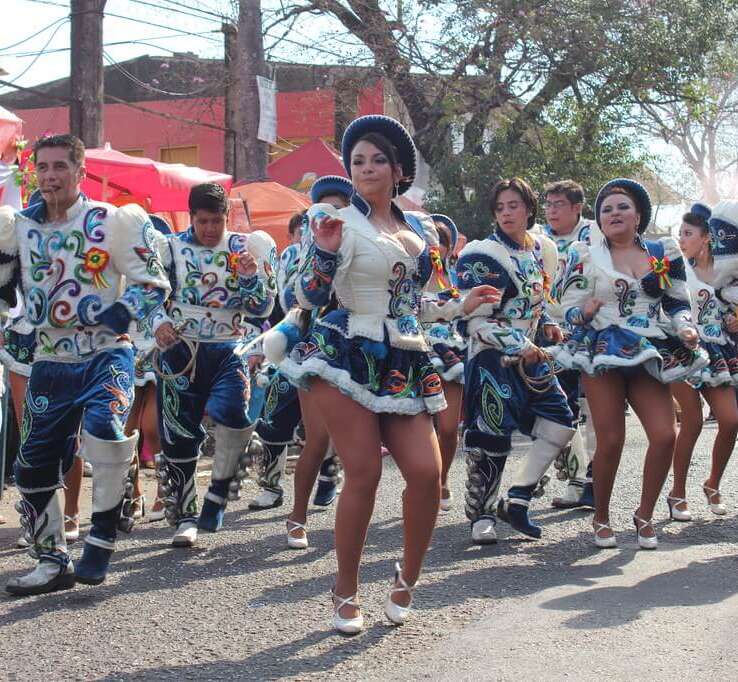
The morning starts with a police-military parade — marching bands, floats, the whole patriotic production — usually rolling through from around General Santos toward Colón, so those streets close early. If you’re guapa or guapo enough to get up early (and here, guapo doesn’t mean handsome, it means hardworking — one of my favorite bits of Paraguayan Spanish flipping expectations on you), you’ll catch it from the start.
Later, it’s the students’ turn. School kids march down Palma Street toward 14 de Mayo in their own procession, and I promise you, it’s more moving than it sounds — generations of Asunceños grew up in that same parade, waving the same flags their parents once waved. There are history tours too, sometimes called the Circuito Fundación, tracing the old colonial footprint of the city if you want context with your celebration.
But if you ask me where the real magic happens, it’s the Costanera in the evening. Our riverside promenade turns into one big open-air party — music, food stalls, families spread out on blankets, kids running around with paint on their faces. This is where jopará — our beautiful, chaotic mix of Spanish and Guaraní that most of us speak without even thinking about it — comes out in full force. You’ll hear vendors calling out in half-Spanish, half-Guaraní, and honestly, once you tune your ear to it, it’s one of the most charming things about being here.
Where to Actually Stand If You Want the Best Experience
Look, the historic center is where the ceremony and formality live — that’s your parade-watching territory, but chake, seriously, watch yourself around the road closures and crowd crushes near the main routes. If instead you want something looser, warmer, more “come as you are,” head straight for the Costanera in the late afternoon. Bring a hat, because it can get properly haku — hot, in the Guaraní sense that somehow captures more heat than the English word does — even in what’s technically our cooler season.
A Few Honest Tips Before You Go
Banks and offices close, so handle your errands the day before. Traffic near the parade routes gets genuinely chaotic, so build in extra time or just accept you’re walking. And if any of this starts to feel overwhelming — too many people, too much noise, plans falling apart — just remember the phrase that gets Paraguayans through basically everything: tranquilopa. It’s a mash-up of the Spanish “tranquilo” and the Guaraní “pa,” and it basically means “it’s all good, relax.” Say it to yourself, grab a tereré from a nearby vendor if it’s not too early in the day for it, and let the day happen around you. That’s genuinely the best way to experience it.
If you’re building a longer trip around this date, our Asuncion Festivals by Month guide will show you what else is worth catching that month, and if your dates stretch a little further, our Best Spring Events in Asunción piece picks up right where this one leaves off.
Plan Your Asunción Adventure
🎁 Free Gift: Grab our Ultimate Asunción Insider’s Guide (Free E-book) to skip the tourist traps.
Download your free guide
🗺️ Experience More: Discover the hidden gems of the city with our Top-Rated Asunción Tours.
Explore tours
🏡 Stay Local: Browse our curated collection of Luxury & Boutique Airbnb Offers for the best stays in the city.
Browse stays